


Power Rangers: Heroes of the Grid (Available Now!)


Each game reaches its climax with a confrontation with the enemy Master, a devastatingly powerful foe who must be thwarted if the Rangers wish to save the city! Do you have what it takes?
The Lord of the Rings: Journeys in Middle-earth – Villains of Eriador Figure Pack


This figure pack contains three detailed, unpainted plastic figures that give the Gulgotar, Atarin, and Coalfang enemies from both the Bones of Arnor and Hunt for the Ember Crown campaigns an imposing presence on your tabletop. But you don’t have to face these dastardly villains unprepared. Six new trinkets and three exciting new titles give you new ways to deal with any enemies you come across.
Pipeline

The refinement of oil has long been part of the government-controlled energy sector. Amassed with an incredibly complex and inefficient system of refineries, the government has felt the severe pressures of worldwide demand and the ever-increasing global standards for refinement. Unable to keep up with demand, the government has only one option: privatizing the oil industry.
This is where you come in. Seeking to capitalize on this new opportunity, in Pipeline you start a company in the oil business. You will focus on building a much more efficient pipeline network in your refinery, hiring experts that provide valuable benefits over your competitors, and managing the logistics of purchasing and selling your refined oil in the various markets. You will need more than strong economic skills – carefully crafting an interweaving network of pipelines just might ensure your victory!
Ticket to Ride 15th Anniversary


Hadara

Extraordinary Adventures: Pirates

In more detail, you have one ship on each of the three “tracks”, i.e., pathways through the Caribbean Sea. On each turn, you play three cards from your hand to move your ships. Your cards have a basic movement number, and often a secondary action. You may use one or the other to move your ships down the track or gain special advantages.
Each of the three tracks winds through the Caribbean islands toward your ultimate goal: the Spanish Treasure Galleon at Trinidad. Along the way, there will be detours that lead to merchant ships that may be plundered, and towns that may be visited to cash in your plunder for treasure. Plundering merchant ships and visiting towns also allows you to recruit more crewmen (cards) for your crew (deck). The better your deck is, the faster that your ships are able to move, so deciding when to take detours for plunder and recruiting and when to sail on toward your ultimate goal is an important decision that every pirate captain must make.
The first pirate captain to reach the Treasure Galleon at the end of any track ends the game. Each pirate ship scores points based on what place they finished on each track, as well as for the treasures earned by selling plunder. The richest captain goes down in history as the Pirate King!
Escape the Dark Castle

Escape the Dark Castle is a simple, cooperative game of retro-atmospheric adventure.
Players take on the roles of prisoners, wrongfully incarcerated in the depths of The Dark Castle. Whether it’s the Abbot, the Tailor or any of the six playable characters, each prisoner is represented by a character card and a custom character dice showing that prisoner’s unique endowment of Might, Cunning and Wisdom – the game’s three traits.
Embarking on a desperate quest to escape, the players must work together using custom dice and item cards to overcome the castle’s many horrors, traps, and challenges – each of which is represented by a large, illustrated chapter card. At the beginning of each game, 15 of these chapter cards are drawn at random from a larger deck to create a unique castle every time.
Gameplay involves one player revealing a new chapter card each turn, in a motion like turning a page of a book. When a card is turned, the next chamber or passageway into which the prisoners have stumbled is revealed. There is no turn order. Instead, players decide as a group who will turn the next chapter card, and there are often grisly consequences for the one that does!
Once revealed, the chapter card will explain the situation facing the group and what must be done to get through it. In the style of choose-your-path adventures, most chapters offer the group a choice about how to proceed. Bribe the drunken guards or attack them? Charge the beast or lure it out? Steal from the kitchen stores or keep moving?
Each chapter is a mini-game and a variety of mechanics are required to complete them, from RPG-style skill tests for an individual character, to push-your-luck dice rolling as a team, to the playing of item cards collected along the way to bolster the tactical abilities of the group.
When the players choose to enter (or fail to avoid) combat, all players roll their unique character dice simultaneously to make an attack against the enemy. They need to collectively muster the right combination of Might, Cunning and Wisdom to defeat the foe in question, or risk taking damage. Blocking, Resting, and the use of Weapons, Relics and Potions will help to keep the prisoners alive.
The goal of the game is for the group to complete every chapter in the castle deck, then defeat the final boss. To win, they must keep every member of the team alive – if any player is killed the game ends immediately.
Pathfinder 2E Core Rulebook and Bestiary

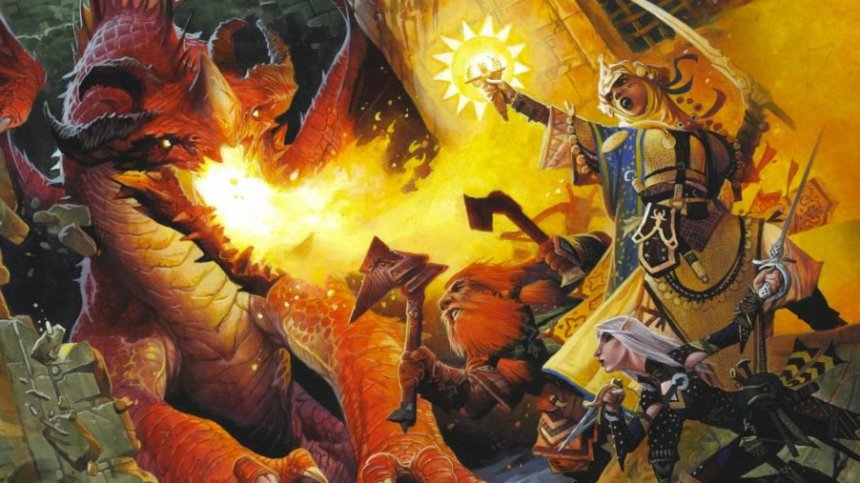
• Streamlined and revised rules to help ease new players into the game while providing the depth of character options and tactical interest that have defined Pathfinder from the beginning!
Unleash the Beasts!
The Pathfinder 2E Bestiary has over 400 of fantasy’s fiercest foes bursting from the pages of this enormous compendium of the most popular and commonly encountered creatures in the world of Pathfinder! From familiar enemies like orcs, dragons, and vampires to new horrors like the nightmarish nilith and the three-headed mukradi, to suitable servants for summoners of every alignment, this must-have companion to the Pathfinder Core Rulebook is crawling with creatures to challenge characters of any level.
The Pathfinder Bestiary includes:
• More than 400 monsters drawn from mythology, genre classics, and more than a decade of Pathfinder, with plenty of new monsters too!
• Gorgeous full-color illustrations on nearly every page!
• Detailed monster lists sorted by level, type, and rarity to help you find the right monster for any situation!
• Universal monster rules to simplify special attacks, defenses, and qualities like grab, swallow whole, and regeneration.
• Guidelines for providing appropriate monstrous treasures for any occasion.
• Detailed lore sidebars offering additional information about Pathfinder’s most popular monstrous friends and foes!
Nemesis (Available Now!)

Nemesis is a cooperation game combined with bluffing, backstabbing, and other elements of a science-fiction survival horror adventure.
Zombicide: Invader (Available Now!)

Most of the time, Xenos are predictable, but there are a lot of them and they use nasty tactics not encountered in previous Zombicide games. Only through cooperation can players achieve the Mission objectives and win.
Terror Below (Available Now!)

During the game, your squad of unlikely heroes will visit locations around the small desert town to find bounties, scavenge for weapons, and try to survive as you distract the worms. Eventually, those worms will attack. If you are in their path of destruction, you better be prepared for a fight!
Armada: Super Star Destroyer

Of course, such a huge miniature serves as a stunning reminder of Imperial might on the battlefield—and it’s also a fully functional warship that you can add to your Imperial fleets. With four unique ship sheets, an assortment of tokens, and twenty-four upgrade cards, including iconic commanders like Admiral Piett and Emperor Palpatine, any rival fleet will tremble to face the might of your onslaught.
We’re Doomed!

We’re doomed! The world is coing to an end! We must act now to survive!!! Players are the most powerful leaders in the world working alongside up to nine others to build a starship. Time is short! The goal? Build and be on a starship that escapes a dying world — or betray everyone to ensure your own survival. No seats on the starship are guaranteed. We’re Doomed! is a quick, timed, panic-inducing game of international collaboration, retaliation, diplomacy, conspiracy, and blowing each other up for fun!
It is not the 11th hour. It is the final hour. Do we have time? How many seats will be available? Who will get a seat? Will the ship even get completed? During the Action Phase, players take one action in turn order to produce or steal either Resource or Influence tokens. Resource tokens are used to build the escape ship. The bigger the ship, the more players can escape to victory at the end of the game. Influence tokens determine who boards the ship first at the end of the game. Each civilization is better at one of the standard actions.
During the Contribution Phase, there is no turn structure. Players can negotiate as they pledge their Resources to building the escape ship by contributing Resource tokens. The player who contributes the most Resources is awarded 1 Influence and gets to draw the event card for that round. Each card is one of one hundred unique and ruthless event cards that change the game drastically — introducing new restrictions, secret missions, ethical dilemmas, physical challenges, robots, aliens, lizard-people and more. The player who drew the event card then takes an action, starting the next Action Phase. The game continues in this fashion (actions, contributions, event) until time is out!
After 15 minutes, play stops. Time to board the starship. Who gets in first? The players with the most Influence board the ship first. Once full, the ship launches and the remaining players are left behind to die. Beware! Resources can also be used to nuke a player, completely eliminating them from the game, so watch the other players’ Resource token stockpiles!
Witness humanity at its worst and finally come to terms with the truth you have known all along — we’re doomed!
Edge of Darkness (Available Now!)

Edge of Darkness is the third Card Crafting Game from Alderac Entertainment Group designed by John D. Clair. Edge of Darkness combines Card Crafting, Worker Placement, shared deck-building, and a whole new Threat Challenge system in a medium-weight euro-style board game of 60 to 120 minutes for 1 to 4 players.
Players are the heads of powerful guilds in the City. Each Guild vies with the others to become the leaders of the City in a desperate struggle against great evil. But the Guilds must also work together because the dangers facing the city can harm them all.
The Guilds exert their control in the city by sending agents to various locations where they can generate resources or abilities and enable the Guild to take actions. Guilds grow in power as they maneuver their agents and loyalists into positions of importance in the districts and organizations of the City. Over time the Guilds can seek to create synergies between the places their agents have been assigned and the tendrils of influence the Guilds have connected to the City’s infrastructure.
To win a Guild must have the most power in the city when the game ends. Power is gained having the allegiance of important citizens and nobles, by accumulating wealth, and by undertaking actions beneficial to the City such as defending it from external and internal threats.
Here are some highlights of the mechanics in the game:
- Card Crafting: Similar to the original card-crafting game, Mystic Vale, all cards are constructed of crafting slips which have game content on 1/3rd of the slip and are transparent on the other 2/3rds. During the game players will construct cards, combining (sleeving) different effects onto one card (ideally in ways that make strategic sense). However, unlike Mystic Vale, the transparent cards are double-sided, and when you upgrade the “good” side of the cards (front), you also add strength to the “bad” side of the cards (back).
- Group deckbuilding using one shared deck: Rather than having your own deck, there is a central deck that all players draw from and discard to. Different players will have the allegiance of different cards in that deck. Using other players’ cards means you have to pay them. During the game you can claim allegiance of more cards in the deck by sleeving a slip into the card with your color and seal.
- Card-driven worker placement: While your actions are card-driven, most costs in the game are in the form of opportunity cost. Advancements don’t have a cost, instead they require the use of workers to a greater or lesser degree depending on the power of the card. e.g. many effects require placing or pulling workers from different city locations as dictated by the card effects. Since you have a limited number of workers to use, you will constantly be choosing to forgo one useful thing in order to do another.
- Threat Tower: There is a Threat Tower which dictates when and whom Threats will attack. Cards leave the shared deck and enter the Threat Board, where they accumulate Threat Cubes on each player’s turn. These cubes are color-coded, and when a threshold number of cubes of a given color accumulate on a card, it attacks the City. If the color matches one of the players, it attacks that player. If the color is black, it attacks all players!
- Modular set up: Edge of Darkness will come with 12 Locations. Each game you use only 10 of these Locations, which can be specifically selected or chosen randomly, making for a lot of variety from game-to-game in the types of challenges you will face and the strategies you will need to employ. These Locations are comprised of a Location Board and Crafting Slips. Location Boards may specify special rules for worker placement, or extend the basic rules with all new systems. For example, a combination of Location Boards can be used to assemble a party of heroes to take the fight to the Threat Tower and engage in a Monster Hunt!
Smash Up: World Tour – Culture Shock

The World Tour continues!
In order to see every continent on our world tour, we just had to include five factions! One entire free faction of fun for the price of four!
Culture Shock takes us through the folk and fairy tales of: Russia, where minions are frequently transformed; West Africa, where sharing stories and cards is valued; and Germany, where uniting characters from the same tale gives multiple benefits. We also look at the incredible histories of: the Inca Empire, known for its roads and monumental architecture; and Polynesians, who spread out on as many islands as possible.
Culture Shock is fully compatible with all previous Smash Up expansions.
Curios

You are a rogue archaeologist, traveling the world for history’s lost artifacts. But the market for artifacts can shift like the rains of Africa: One minute, treasures from a lost pharaoh’s pyramid are all the rage with collectors, and the next minute religious artifacts discovered in a remote temple are what’s in demand.
In Curios, players acquire artifacts from various treasure sites without knowing their worth. Using the cards in your hand and those revealed by others, you can deduce the possible value of your artifacts, allowing you to focus your efforts on the more profitable ventures.
Curios is a game of worker placement, deduction, and bluffing like no other. This simple and intuitive game is quick to learn and even quicker to play!
Walking in Burano

Burano is a beautiful island of Venice in Italy, known for its colorful houses. Walking through the island, you will see these vibrant houses on both sides of the canal, as well as the personal décor placed by the inhabitants of these houses and shops. Tourists always linger on the street to appreciate and enjoy the view.
The colorful houses of Burano need a fresh coat of paint in order to stay beautiful and vivid. Use your creativity to refurbish and decorate the houses and amaze the tourists and local people with your masterpiece!
Walking in Burano is a family game. Players place the Floor Cards in order to receive a visit from different characters. They will score points based on the various symbols on the houses. To be the player with the most points at the end of the game.
Point Salad

Point Salad is a fast and fun card drafting game for the whole family. There are over 100 ways to score points. Players may use a variety of strategies and every game of Point Salad is unique!
Cards come in six different types of veggies, and the back of each card has a different scoring method. So for instance, one scoring method may award 2 points for every carrot you have, but deduct a point for every onion. By drafting combinations of veggies and point cards that work for your strategy, you can amass the most points and win.